Mattress Materials and Comfort
Choosing a Latex Topper: Thickness, Firmness, and Feel
A latex topper can change the first impression of a mattress without replacing the support underneath it. The right choice depends less on a universal “best” thickness or firmness than on what your bed feels like now, what you want it to feel like, and how much of that change a separate layer can realistically deliver.
A bed can be supportive yet feel too firm at the surface. It can also feel comfortable at first and still lack the cushioning a sleeper wants around the shoulders, hips, or other pressure points. In either case, a latex mattress topper may offer a way to adjust the upper feel while keeping the existing mattress in place.
That adjustment is not unlimited. A topper sits above the mattress; it does not rebuild a worn-out support core, correct a damaged foundation, or turn a fundamentally unsuitable bed into an entirely different one. Its thickness and firmness influence how clearly you feel the layer, how deeply you settle into it, and how much of the mattress beneath remains perceptible.
Before comparing labels and specifications, begin with a practical question: what exactly should change? A little more give? A softer first contact? More responsive cushioning? A latex topper is easier to choose when the desired result is described in those terms rather than as an abstract preference for “soft” or “firm.”
What a latex topper can—and cannot—do
A topper is an added comfort layer. It can alter the feel at the surface, add cushioning, and soften the impression of a firm mattress. Depending on its construction, latex may also create a buoyant, responsive feel: it compresses under pressure and tends to spring back when pressure is removed. That sensation differs from materials that allow a slower, more enveloping sink.
The mattress below remains central to the experience. Its support core, condition, construction, and foundation determine much of the bed’s overall behavior. A topper can soften a sound, overly firm surface, but it is not a dependable repair for sagging, broken components, or a mattress that no longer supports the sleeper as intended. Adding a thick layer to a bed with a pronounced dip may simply place cushioning over an unresolved problem.
There is also a useful distinction between surface comfort and support. A soft upper layer can reduce the sensation of pressure at the skin and joints, while the underlying mattress contributes much of the structure that supports the body. Neither firmness nor softness, considered alone, tells the whole story. The goal is a combination that feels comfortable and stable for the person sleeping on it.
If you are uncertain whether the mattress or its foundation is responsible for discomfort, check the bed’s setup first. Review the manufacturer’s instructions for the base, inspect for visible sagging, and consider whether the mattress has changed over time. A topper is most likely to help when the underlying mattress is still in usable condition and the desired adjustment is primarily at the surface.
Thickness: how much change do you want?
Thickness affects how noticeable a topper feels, but it should not be treated as a simple measure of quality. A thicker layer generally creates more separation between the sleeper and the mattress underneath. It may provide a more pronounced cushioning effect, while a thinner layer usually makes a subtler change and preserves more of the original mattress feel.
The difference is a matter of degree, not a guarantee. Two toppers with the same stated thickness can feel different because of their firmness, material density, shape, cover, and the mattress beneath them. Descriptions and specifications are useful for comparison, but they cannot fully predict how a particular person will experience the combination.
| Thickness approach | Possible effect | Useful question |
|---|---|---|
| Thinner layer | A more restrained adjustment, with more of the original mattress feel likely to remain noticeable. | Do I want a modest change rather than a new-feeling surface? |
| Medium layer | A more distinct comfort layer, balancing surface cushioning with the feel of the bed below. | Am I looking for a clear change without adding substantial height? |
| Thicker layer | A more pronounced separation from the mattress and potentially deeper cushioning. | Do I want a significant surface change, and can my bedding accommodate it? |
These are broad tendencies, not standardized categories. Manufacturers may use different thickness options, and firmness descriptions are not always directly comparable between brands. Read the product’s measurements and construction details rather than assuming a particular number of inches will produce a precise comfort result.
Thickness can also affect the practical fit of the bed. A topper adds height, which may change how well fitted sheets stay in place and how easy it is to get into or out of bed. If your mattress already has a deep profile, check sheet depth and the topper’s dimensions before deciding. A protector may need to fit over both the mattress and topper, depending on its design and how you use it.
In shared beds, the added layer will usually cover the full sleep surface unless it is specifically designed otherwise. Consider whether both sleepers want a similar change. A difference in comfort preferences can make one shared topper feel like a compromise, particularly when a firmer or softer surface is important to only one person.
Firmness: a description, not a universal measurement
Firmness labels can be useful shorthand, but they are not a universal scale. One maker’s “medium” may not match another’s. In addition, how a topper feels depends on the sleeper’s body, sleeping position, the temperature and construction of the material, and the mattress it rests on. A topper that feels soft on a firm mattress may feel quite different over a yielding or deeply cushioned bed.
Think about firmness in relation to the change you want. If the mattress feels too hard at the surface, a softer topper may add a more yielding first layer. If the bed feels too soft or unstable, adding another soft layer is unlikely to provide the firmer support you are seeking. A topper is not necessarily a way to make a mattress firmer; its ability to change the overall sensation is limited by the structure below.
Latex’s responsiveness is part of its appeal for people who prefer cushioning without a slow, deeply sinking sensation. Even so, “responsive” does not mean firm, and latex products vary. Ask how the material is described by the manufacturer, whether firmness is specified, and whether the product can be returned if the feel is unsuitable. Where possible, test a comparable latex surface in person, while remembering that a showroom mattress may not behave like your own.
Body weight and proportions affect how much a layer compresses. Two people can lie on the same topper and experience different levels of sink and pressure relief. This is one reason to avoid relying only on a general firmness rating, a single reviewer’s experience, or a claim that a specific firmness suits every sleep position.
Sleep position and pressure points
Sleep position can help clarify what kind of surface adjustment may be worth considering, though it does not dictate a single correct choice. Side sleepers often notice pressure around the shoulders and hips, especially on a firm surface. Added cushioning may make the surface feel more accommodating, but too much give can also feel unstable to some sleepers.
Back sleepers may prefer a surface that cushions without allowing an excessive sense of sinking. Stomach sleepers often look for a comparatively stable, less yielding feel, though individual needs differ. People who change positions through the night may value a responsive surface that makes it easier to move, but preference should be judged against the feel of the whole bed.
Pay attention to specific sensations rather than trying to diagnose yourself from a position chart. Is there localized pressure? Does the bed feel comfortable for a short period but not over a full night? Do you feel perched on the surface, or do you sink more than you want? These observations can help distinguish a need for surface cushioning from a concern about overall support.
Mattress comfort is subjective, and persistent pain or sleep problems can have causes that a bedding adjustment will not address. A topper is a comfort choice, not a treatment. If you have ongoing pain, numbness, or other health concerns, seek advice from a qualified health professional rather than assuming a different firmness will resolve them.
How latex feels compared with other materials
“Latex” describes a material family used in bedding, not one exact sensation. Latex can be made through different processes and may vary in density, firmness, and construction. A topper’s cover and the mattress beneath it further shape the feel. Look for specific material information rather than assuming every latex topper will have identical resilience or softness.
Many sleepers describe latex as buoyant and quick to respond. It tends to push back as it compresses, which can create a feeling of lift compared with materials that contour more slowly. That does not mean latex never conforms to the body; it means the manner of conforming may feel different. If you prefer a close, slow-melting sensation, latex may not deliver the same experience as a different comfort material.
Natural, organic, and certified are terms that require careful reading. A product’s marketing language alone does not establish what it contains or which standards it meets. If these qualities matter to you, check the composition, the scope of any certification, and whether it applies to the latex itself, the textile cover, or another component. An organic mattress and an organic topper are not interchangeable descriptions, and certification claims should be tied to the specific item and materials in question.
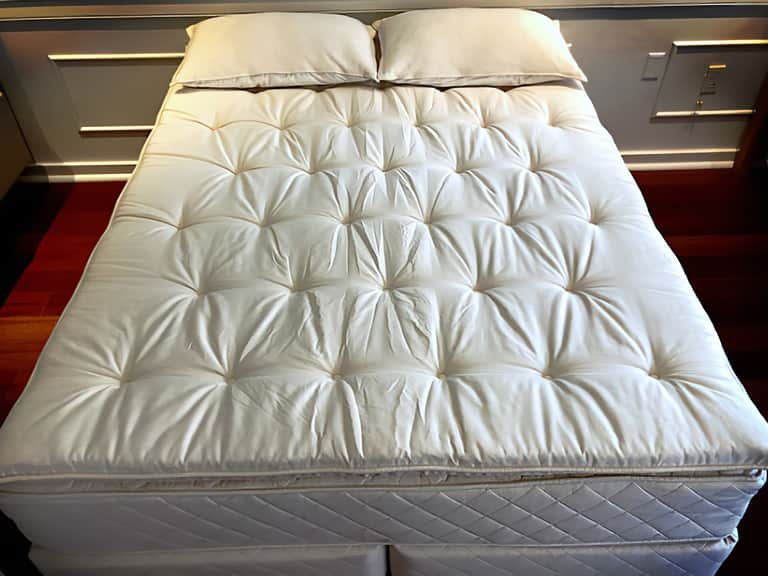
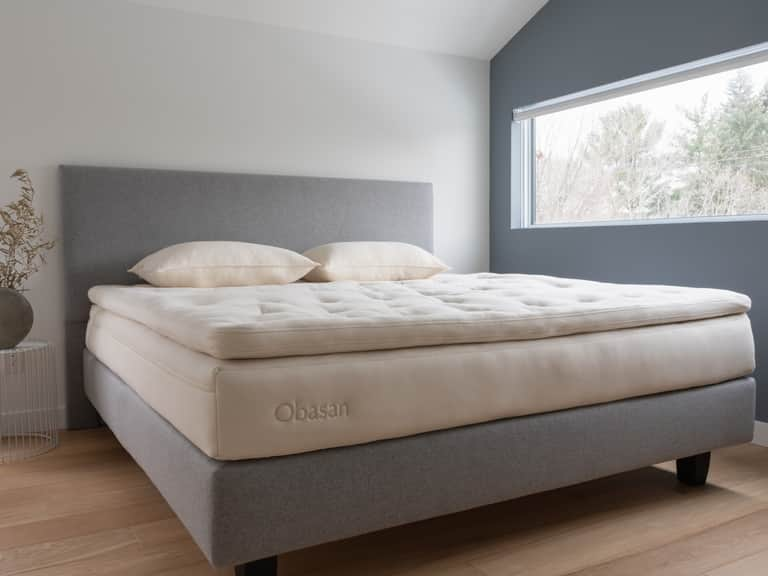
For context, a finished mattress may combine several materials in layers. The Naturally Organic Hudson Luxe Latex Mattress, for example, is described as having a firm Dunlop latex core, a medium latex cushioning layer, and a separate wool-and-latex topper. That construction illustrates how thickness and feel can result from multiple components working together; it should not be taken as a prediction of how a separate topper will feel on another mattress.
Check compatibility before you buy
A latex topper should be assessed as part of a bedding system. Confirm that its size matches the mattress, and check whether its dimensions or cover construction affect how it stays in place. If you use a mattress protector, fitted sheet, or mattress encasement, make sure those items can accommodate the combined height. An ill-fitting sheet can pull loose or bunch, undermining the comfort of an otherwise suitable layer.
Review the mattress and topper care instructions separately. A topper’s care requirements may differ from those of the mattress beneath it, and not every component is washable. Look for guidance on spot cleaning, ventilation, and the use of protective layers. Do not assume that a removable cover is machine washable; the manufacturer’s care directions should govern.
Also check whether the topper can be used with your bed base and whether the base meets the mattress maker’s requirements. A proper foundation helps the mattress perform as intended. Adding a topper does not make an unsuitable support surface suitable, nor does it remove the need to follow the mattress warranty’s setup and maintenance guidance.
Before making a decision, read the return policy carefully. Confirm the allowed trial period, return fees, packaging requirements, and whether the policy applies to the topper specifically. A trial can be valuable because comfort becomes clearer over repeated nights, but the terms matter. A generous-sounding policy may include conditions that are important to know in advance.
A practical way to choose
Instead of starting with the widest range of products, work through a short decision process. It keeps the focus on the bed you have and the change you actually want.
- Describe the problem clearly. Decide whether the surface feels too firm, lacks cushioning, or simply does not have the responsive quality you prefer. Separate those concerns from sagging or loss of support.
- Check the mattress and base. Look for visible wear, dips, or setup issues. If the underlying mattress is damaged or no longer supportive, a topper may only disguise the problem temporarily.
- Choose a degree of change. A subtle adjustment and a pronounced new layer are different goals. Let that distinction guide your thickness comparison.
- Consider firmness in context. Compare the topper’s stated firmness with the feel of your existing mattress, rather than treating the label as an absolute rating.
- Verify dimensions and care. Check mattress size, added bed height, sheet depth, protector fit, cleaning guidance, and base compatibility.
- Read the terms before purchase. Understand the return policy and warranty, including any requirements for the mattress or foundation.
Keep expectations measured. A well-chosen layer may make an otherwise sound mattress feel more comfortable, but it cannot promise that every sleeper will find relief or that the bed will feel entirely new. The most useful comparison is between your current surface and the specific adjustment you hope to achieve.
Common assumptions worth questioning
“Thicker is always better.” More material can make the change more noticeable, but it can also add height and reduce the feeling of the mattress underneath. The right thickness depends on the scale of the adjustment you want.
“Firmness ratings are standardized.” They are not always comparable across manufacturers. Treat them as descriptions within a product range, and seek additional detail about construction and material.
“A topper fixes a worn-out mattress.” A topper can change surface comfort, but it does not restore a damaged support core or correct a sagging foundation. Assess the bed’s condition first.
“Latex always feels the same.” Latex toppers differ in firmness, thickness, construction, and cover. The experience also changes depending on what lies below.
“Organic automatically means more comfortable.” Material sourcing and certification may be important to a buyer, but they do not determine whether a particular firmness or feel will suit that person. Evaluate material claims and comfort as separate questions.
The bottom line
Choosing a latex topper is an exercise in matching a layer to a bed, not finding a universally ideal number. Thickness helps determine how much the surface may change; firmness influences how the layer yields and responds; and the existing mattress remains a major part of the final feel.
Start with the condition of the mattress, name the discomfort or preference you want to address, and decide whether you are seeking a modest adjustment or a more pronounced layer. Then compare construction, fit, care instructions, and return terms. For anyone researching latex mattress toppers alongside organic mattresses, clear material and certification details deserve attention—but they should sit alongside, not replace, a careful assessment of comfort and compatibility.
The most promising topper is not necessarily the thickest, softest, or most elaborately described. It is the one whose likely effect makes sense for the bed you have and the feel you want to experience.